Cheap Wire From Unknown Suppliers: Why It Costs You ₹50L in Rework
The offer that shows up in your inbox — "GI wire at ₹48/kg, 30% below market" — feels like a win. Then the order arrives. The coil weighs 42 kg instead of 50 kg. The wire gauge is SWG 15.5 instead of SWG 16. The zinc coating flakes off when you bend it. Welcome to the real cost of unknown suppliers.
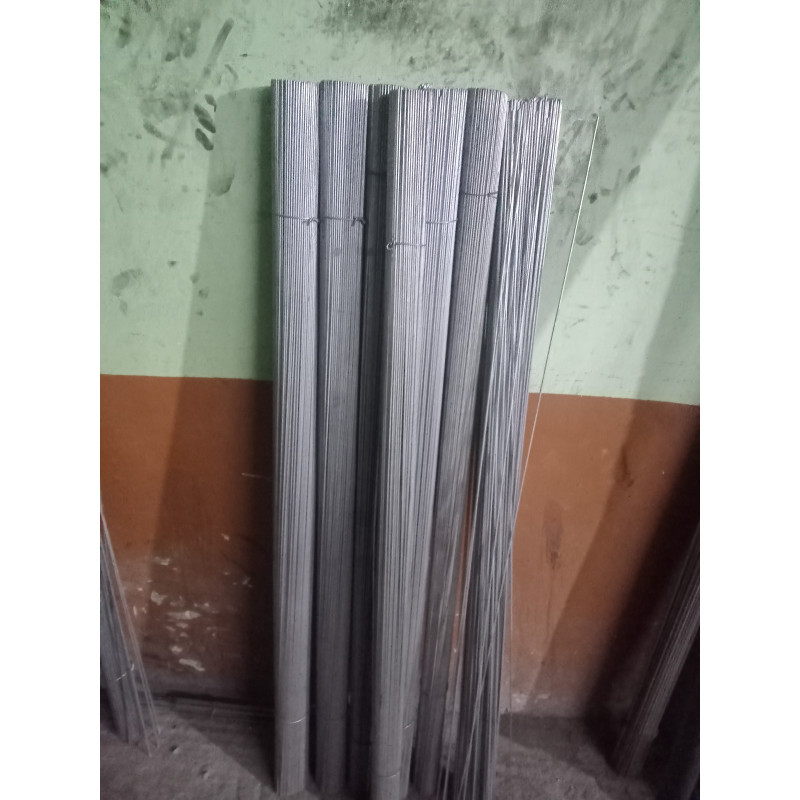
The ₹48/kg "bargain" wire that costs ₹60-67/kg after weight shortfalls, rework, and downtime
Weight Discrepancies · The 10% Shortfall You Do Not Catch
Unknown suppliers often short-weigh coils. Instead of the billed 50 kg, you get 44–46 kg. The difference is too small to notice on a single coil, but on a 100-coil order, you are missing 400–600 kg — effectively raising your per-kg cost by 8–12%.
Most shops do not weigh every coil. They trust the challan. The supplier knows this. If you do not have a calibrated weighbridge at your receiving bay, you are paying for air. And if you catch a discrepancy, the supplier will apologise and "adjust next time" — but next time the same thing happens.
Established suppliers charge more because their weights are honest. A 50 kg coil from a reputable source weighs 50 kg — every time. That reliability lets you quote jobs accurately, plan production, and maintain your margins. The unknown supplier's "bargain" is built on the assumption that you will not check.
Gauge Inconsistencies · When SWG 16 Is Not SWG 16
This is the most dangerous hidden defect. A cheap supplier's "SWG 16" wire measures 1.55 mm instead of the standard 1.63 mm. The difference is just 0.08 mm — almost impossible to see with the naked eye. But the cross-sectional area is 10% smaller, which means the wire has 10% lower breaking strength.
In rebar tying, undersized wire snaps under tension. Workers double-tie every joint to compensate, using 20% more wire than the job calls for. In fencing, the lighter-gauge wire sags between posts and needs re-tensioning within months. In a gabion installation, undersized lacing wire breaks when the basket is filled with stone, causing a blowout.
The cost of rework after a gauge-induced failure is enormous. A gabion wall that blows out requires stone removal, re-lacing, and re-filling — easily ₹50,000–1,00,000 per incident on a medium-sized project. A fencing contract where the wire sags means callbacks and reputation damage that costs more than any single job.
Quality Failures · The ₹50 Lakh Rework Scenario
Here is a real scenario we have seen play out three times in the last five years. A construction contractor saves ₹15/kg by buying GI wire from an unknown supplier. They use 20 tonnes for a large residential project — rebar tying on 8 towers, plus perimeter fencing. Total "saving": ₹3 lakh.
Eight months later, rust stains appear on the concrete surfaces where the GI wire was used for tying. The zinc coating was substandard — likely 20 g/m² instead of the specified 180-290 g/m² (IS 280 Heavy). The wire is rusting inside the concrete, and the rust is leaching through to the surface.
The remediation cost: ₹50 lakh minimum. That is chipping out and redoing the rust-stained concrete surfaces, plus replacing the fencing that is already corroded. The ₹3 lakh saving becomes a ₹47 lakh net loss. Plus the contractor loses their reputation and faces potential legal action from the building owner.
This is not a hypothetical. It happens. The unknown supplier vanished six months after the sale — no warranty, no liability, no recourse. The contractor is left holding the bill.
How to Verify a Wire Supplier Before You Buy
A few simple checks can prevent a ₹50 lakh disaster:
- Verify GST registration and business vintage — a supplier who has been filing GST returns for less than 3 years is a higher risk. Check their GSTIN on the government portal
- Request a certificate of analysis — for GI wire, this should include zinc coating weight (g/m²), tensile strength, and gauge tolerance. A legitimate supplier provides this without hesitation
- Check gauge with a micrometer — measure the wire diameter at three points on each coil. The variation should be within ±0.05 mm for standard-quality wire
- Weigh every coil on arrival — use a calibrated scale. Reject any coil that is more than 2% short of the billed weight
- Do the bend test — bend a piece of GI wire 180 degrees. If the zinc flakes off or cracks, the coating quality is poor. Good galvanising survives a 180-degree bend without flaking
- Check the supplier's physical address — visit if possible. A supplier with an actual warehouse and inventory is far more reliable than one operating from a shared office or virtual address
When Does Cheap Wire Actually Make Sense?
There are legitimate scenarios where buying from a lower-cost, lesser-known supplier is acceptable:
- Non-critical applications — temporary works, formwork that will be stripped in weeks, packaging where appearance and long-term durability do not matter
- Small quantities — if you are buying 50–100 kg for a quick job that will not be inspected, the risk is manageable
- You have tested them — place a small trial order and run full quality checks before committing to volume
- Price difference is modest — 2–3% below market from a new supplier is reasonable. 15–20% below market is a red flag for a reason
For everything else — structural applications, client-facing work, long-term installations, or any project with liability exposure — buy from a verified, established supplier. The premium is insurance.
Frequently Asked Questions · Cheap Wire From Unknown Suppliers
How much can weight discrepancy cost me on a typical order?
On a 5-tonne order, a typical 8% weight shortfall means you paid for 5,000 kg but received 4,600 kg. At ₹70.50/kg, that is a loss of ₹28,200 — wiping out any per-kg saving the cheap supplier offered. Always weigh coils on arrival with a calibrated scale.
What is the most common quality defect in cheap GI wire?
Inadequate zinc coating. Standard IS 280 Heavy coating requires minimum 180 g/m² zinc. Cheap GI wire often has 15–30 g/m² — barely more than electro-galvanised. This wire will start rusting within months outdoors. The only way to verify is with a zinc coating weight test or a simple bend test.
How do I check wire gauge without special tools?
A digital micrometer costs ₹500–800 on any e-commerce site. Measure the wire diameter at three points along a 1-metre sample. For SWG 16, you should read 1.63 mm ±0.05 mm. For SWG 18, 1.22 mm ±0.05 mm. If the reading is consistently below spec, reject the batch.
Can I trust a supplier who offers a test sample?
A test sample is a useful starting point, but be aware that some suppliers send premium-quality samples and deliver lower-quality bulk orders. Always inspect the bulk delivery as thoroughly as the sample. If possible, keep a sealed reference sample from the test order and compare it with the bulk delivery.
Continue Reading
Get a Quote Within 2 Working Days
Established 1985. IS-standard wire, honest weights, consistent gauge. Family-owned, India-based, and built to last.