Anodised Coloured Aluminium Wire: Craft vs Industrial, Price Impact
Why anodised coloured aluminium wire costs more and when the premium is worth it. Batch consistency, colour matching and application-specific recommendations.
Anodised coloured aluminium wire is a specialty product. It is not a commodity like plain aluminium wire or GI wire — and the pricing reflects that. The anodising process adds a durable, decorative oxide coating that can be dyed in virtually any colour. But the cost depends heavily on what you need it for: craft quantities versus industrial volumes, standard colours versus matched shades.
Here is what I have learned from supplying anodised aluminium wire to jewellery makers, craft manufacturers, architectural fabricators, and industrial users for over two decades.
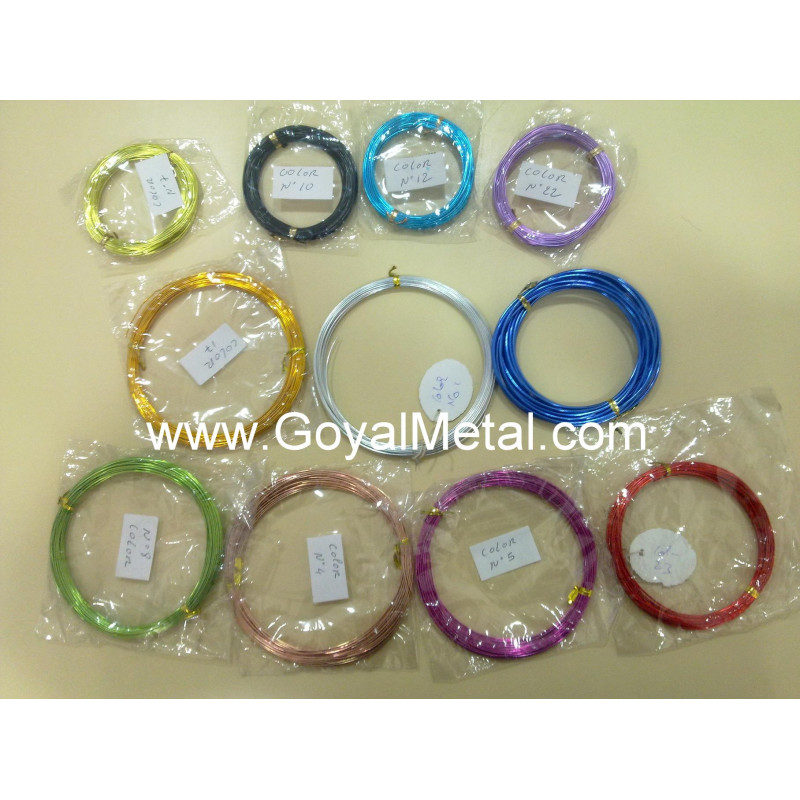
Anodised coloured aluminium wire — 20+ colours for craft and industrial use
Understanding the Anodising Process
Anodising is an electrochemical process that converts the aluminium surface into a durable, porous aluminium oxide layer. The wire is immersed in an acid bath and an electric current is passed through it, causing oxygen ions to bond with aluminium atoms on the surface.
This oxide layer is then dyed and sealed. The result: a colour finish that is part of the metal surface — not a coating that can peel or chip like paint. The colour is UV-stable and highly durable.
The key parameters that affect cost: oxide layer thickness (5-25 microns), dye type and colourfastness, sealing quality, and the wire surface preparation before anodising.
Craft-Grade vs Industrial-Grade: What Is the Difference?
Craft-grade anodised wire is produced in smaller batches, often in a wider range of colours. The focus is on appearance — bright, consistent colour with good surface finish. The oxide layer is typically 5-10 microns. This is perfectly adequate for jewellery, wire sculpture, floral arrangements, and decorative crafts that are indoors and not subject to heavy wear.
Industrial-grade anodised wire is produced to tighter specifications. The oxide layer is thicker (15-25 microns), the dye is lightfast tested for outdoor exposure, and the sealing process is more rigorous. Colour consistency across batches is tightly controlled. This is what you need for architectural facades, outdoor installations, marine applications, and any use where the wire will face UV exposure, abrasion, or chemical contact.
The price difference between craft-grade and industrial-grade can be 40-80%. For many applications, craft-grade is perfectly fine. But specifying craft-grade for an outdoor architectural installation is a mistake that will show up within 2-3 years as colour fade or oxide degradation.
The Batch Consistency Challenge
This is the single biggest issue with coloured anodised wire: colour matching between batches. Even with the same alloy, same dye formulation, and same process parameters, colour can vary slightly between batches due to:
- Minor variations in aluminium alloy composition (even within the same grade)
- Temperature differences in the anodising bath
- Current density variations during processing
- Sealing temperature and time differences
If your project requires multiple batches of wire — for example, a large architectural installation delivered in phases — you must order all the material at once from a single production lot. If you order a second batch six months later, there is a real risk of visible colour difference at the join.
I have seen a ₹5 lakh architectural project delayed by three weeks because the client ordered 200 kg of champagne-gold anodised wire, then ordered another 50 kg three months later. The colour was off. We had to re-anodise the entire 250 kg batch from a single production run.
Lesson: order all your coloured anodised wire in one lot. Always.
Price Impact by Quantity and Colour
| Order Size | Standard Colours | Custom Colour | Typical Premium vs Plain Wire |
|---|---|---|---|
| Small craft (1-25 kg) | ₹80-120/kg premium | ₹150-200/kg premium | 50-100% more than plain wire |
| Medium (25-200 kg) | ₹50-80/kg premium | ₹100-150/kg premium | 30-60% more than plain wire |
| Large industrial (200+ kg) | ₹30-50/kg premium | ₹60-100/kg premium | 15-30% more than plain wire |
| Bulk / contract (1 tonne+) | ₹20-40/kg premium | ₹40-70/kg premium | 10-20% more than plain wire |
Standard colours (black, gold, red, blue, green, silver) are always cheaper than custom colours because the dye baths are maintained continuously. Custom colour matching requires a dedicated dye bath and setup charge (typically ₹5,000-15,000 per colour).
Application-Specific Recommendations
| Application | Recommended Grade | Why |
|---|---|---|
| Jewellery and beading | Craft-grade | Fine gauges, wide colour range, cost-effective for small volumes |
| Wire sculpture (indoor) | Craft-grade | No UV exposure, colour stability not critical |
| Architectural mesh (indoor) | Industrial-grade | Colour consistency across panels is critical |
| Outdoor screening / facades | Industrial-grade | UV exposure requires thick oxide and lightfast dyes |
| Floral arrangements / events | Craft-grade | Short-term use, appearance is main criteria |
| Marine / coastal installations | Industrial-grade (20+ micron) | Salt air accelerates oxide degradation on thin coatings |
| Furniture / lighting fixtures | Both | Indoor furniture can use craft-grade; outdoor needs industrial |
Frequently Asked Questions
Can anodised aluminium wire be bent without cracking the colour coating?
Yes — the anodised layer is integral to the metal surface, not a separate coating. It can be bent, twisted, and formed without chipping or peeling, as long as the bend radius is not too sharp. For very tight bends (less than 2× wire diameter), the oxide layer may show micro-cracking at the bend apex, visible as a lighter colour line. Use industrial-grade with thicker oxide for applications requiring tight forming.
How do I match a specific colour for a large project?
Send us a physical colour sample (RAL card, painted chip, or Pantone reference). We will produce a test piece (coupon) for your approval before running the full order. Always approve the colour sample under the lighting conditions where the wire will be installed — anodised colours can look different under natural daylight versus warm indoor lighting.
Does anodised colour fade over time in sunlight?
Industrial-grade anodised wire with lightfast (UV-stable) dyes will maintain its colour for 10-20 years outdoors depending on UV exposure. Craft-grade dyes are not rated for UV stability and may show noticeable fading within 1-3 years in direct sunlight. For outdoor use, always specify industrial-grade with lightfast dye certification.
Can you match a specific RAL colour?
Yes, we can match any RAL colour within reasonable tolerance. Note that anodised colours have a different visual character than painted surfaces — they have a metallic depth that paint cannot replicate. The colour match will be very close but not identical in appearance. We recommend approving a physical sample before full production for any colour-critical application.
Continue Reading
Get a Quote Within 2 Working Days
We supply anodised coloured aluminium wire in craft-grade and industrial-grade, all standard sizes and colours. Custom colour matching available. Bulk orders welcome.