Bare Copper for Grounding: Why Cheap Wire Fails Your Installation
Why grounding requires bare copper wire. What happens with cheap copper, real stories of failure, and why quality verification matters for safety-critical applications.
Grounding is not like other wire applications. It's the one place where failure doesn't mean a production delay or a rework cost — it means someone could die. In my 40 years, I have seen more corner-cutting on earthing wire than on any other product category. And every time, it's the same reasoning: "It's just a ground rod connection. Any copper will do."
Any copper will not do. Let me show you why.
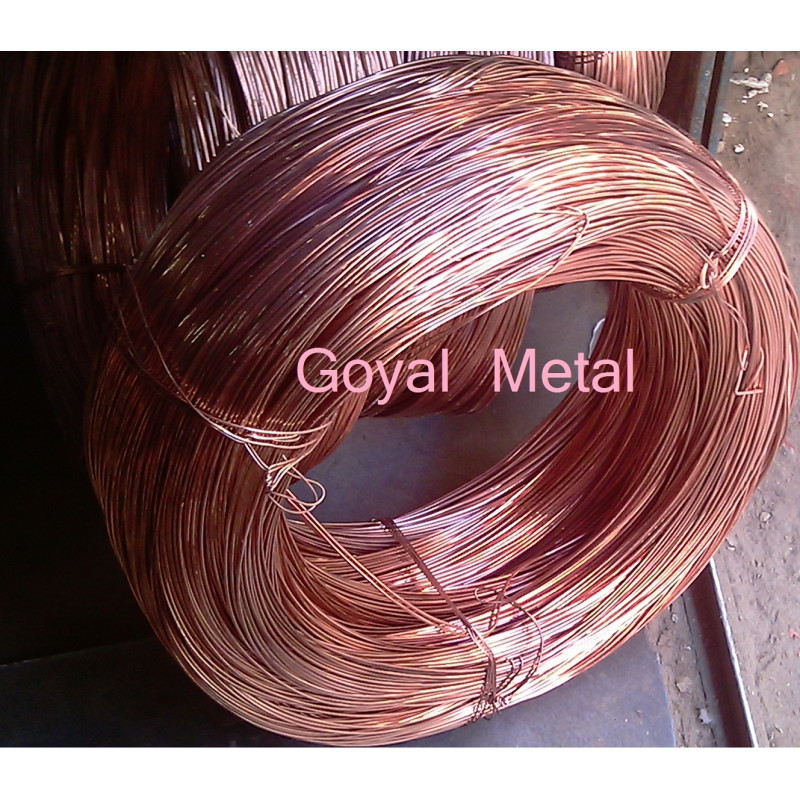
Bare copper — 99.9% purity, the only wire for critical earthing
What Makes Bare Copper Right for Grounding?
Bare copper is the standard for earthing conductors for three fundamental reasons:
Corrosion resistance. Copper develops a protective patina (copper oxide) that actually protects the underlying metal. Unlike iron, which rusts through progressively, copper's natural patina slows further corrosion dramatically. Buried copper can maintain its integrity for 30-50 years.
Conductivity. Copper is the most conductive common metal. For a grounding conductor, lower resistance means fault current reaches ground faster and more reliably. With aluminium or steel, you need a larger cross-section for the same fault-carrying capacity.
Mechanical durability. Bare copper handles the physical abuse of burial, concrete embedding, and outdoor exposure better than tinned or coated conductors that can be nicked.
The "Cheap Copper" Trap
Here's a story I've seen play out at least a dozen times. A buyer sources "earthing copper" from a general cable supplier at ₹50-60/kg below the market rate. The wire looks fine — bright, clean, good surface. It passes the visual inspection. It gets buried alongside the foundation. Five years later, the earth resistance reading starts climbing. At year eight, the ground rod connection fails completely.
The culprit: the wire was not pure copper. It was copper-clad steel or low-grade copper with high impurity content. The ₹50/kg saving on a 100-metre run cost ₹2 lakh in excavation, replacement, and — more importantly — years of compromised safety while the fault went undetected.
I call this the cheap copper trap. The wire looks like copper. It feels like copper. But it doesn't perform like copper in the long term. The impurities create galvanic cells that accelerate localised corrosion. Within a few years, the conductor cross-section can reduce by 30-40% at the worst spots.
What to Look For in Grounding Copper
Purity certification. Ask for the copper purity test report. Grounding wire should be minimum 99.9% pure copper (Cu-ETP or Cu-OF grade). Anything less and you're compromising long-term performance.
Stranding and flexibility. For earthing conductors, stranded wire is preferred over solid for sizes above 10 mm² because it handles ground movement and thermal cycling better. Each strand should be uniform — no broken or uneven wires.
Surface quality. Bare copper for grounding should have a clean, oxide-free surface. Heavy tarnishing, pitting, or discolouration can indicate impurities or improper storage.
Gauge accuracy. This is a big one. I've seen "25 mm²" earthing cable that measured 22 mm² actual. The difference in fault current capacity is significant. Always verify cross-section with a micrometer.
Real Failure: The Factory That Lost Production for a Week
A manufacturing unit in Faridabad called us in 2019. Their earth pit resistance — which had been 1.2 ohms at commissioning — had climbed to 18 ohms over seven years. They were getting nuisance tripping on sensitive equipment. They dug up the earthing grid and found that the "copper" conductor had severely corroded in patches. Laboratory analysis showed it was 97% copper with trace iron and sulphur — not certified earthing grade.
The replacement cost: ₹3.2 lakh in materials and labour. Plus a week of production downtime. The original saving: about ₹12,000 on a cheaper wire purchase seven years earlier. That's a 27:1 cost ratio. Get the certified material.
Quick Selection Guide for Earthing Copper
| Application | Recommended Size | Notes |
|---|---|---|
| Residential earthing | 8 SWG / 4 mm² | Minimum for standalone homes as per IS 3043 |
| Commercial building earthing | 25 mm² stranded | Standard for most commercial installations |
| Industrial earth grid | 50 mm² to 120 mm² | Depends on fault current rating of installation |
| Transformer grounding | 70 mm² minimum | High fault current requires larger conductor |
| Lightning protection | 50 mm² minimum | IS 2309 specifies minimum for lightning down conductors |
Frequently Asked Questions
Can I use aluminium wire for grounding instead of copper?
Aluminium is not recommended for direct burial earthing due to its corrosion behaviour in soil. If you must use aluminium (e.g., for cost reasons in a substation), it requires anti-corrosion compound at joints, larger cross-section (1.5 - 2× copper), and should never be buried directly in soil — use concrete-encased electrode instead.
How do I verify that my earthing copper is pure?
Ask your supplier for a mill test certificate with chemical composition. The copper content should be ≥99.9%. If the supplier hesitates or cannot provide third-party test reports, that is a red flag. Reputable suppliers maintain traceability from the refinery to the finished wire.
Is tinned copper wire better than bare copper for grounding?
Tinned copper adds corrosion protection for extreme environments (marine, chemical plants). For standard soil burial, bare copper is preferred because tin coating can disguise impurities and the coating can be nicked during installation, creating a galvanic cell between tin and copper at the damage point.
What does IS 3043 say about earthing conductor material?
IS 3043 (Indian Standard Code of Practice for Earthing) specifies copper, aluminium, hot-dip galvanised steel or steel as acceptable materials, but copper is preferred for buried earth electrodes and conductors due to its corrosion resistance and conductivity. The standard specifies minimum cross-sectional areas based on fault current capacity.
Continue Reading
Get a Quote Within 2 Working Days
We supply certified bare copper wire for earthing with full traceability and test certificates. Stranded and solid, all standard sizes.