Wire Gauge Mistakes: Wrong Size Costs You Production Shutdowns
A wire that is one gauge too thin can shut down your production line, damage machinery, or cause a safety incident. Here is how to choose the right gauge, what happens when you get it wrong, and why material choice matters just as much as diameter.
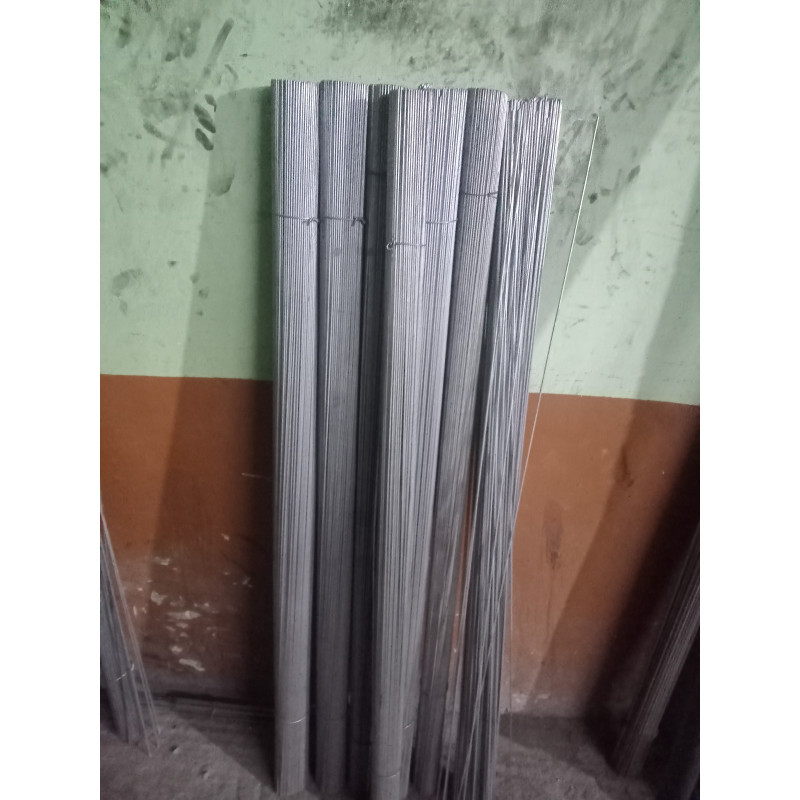
A 0.08 mm gauge error means 10% less cross-section — wire snaps under load
Why Wire Gauge Matters More Than You Think
Wire gauge is not just a number on a specification sheet. It is the single most important parameter that determines how much current a wire can carry, how much load it can bear, and how long it will last under stress. Get the gauge wrong and the consequences range from frustrating (wire breaks during installation) to catastrophic (electrical fire, structural failure, production shutdown).
The Standard Wire Gauge (SWG) system, also known as Imperial Wire Gauge, is the most commonly used system in India and the UK. In the SWG system, a higher gauge number means a thinner wire. SWG 22 (0.71 mm) is much thinner than SWG 10 (3.25 mm). This inverse relationship is the source of countless procurement errors.
Real example from our records: A Mumbai-based manufacturer ordered SWG 22 GI wire for a fencing project that needed SWG 16. The fence sagged within two weeks and wires began snapping. Replacing 2,000 metres of fencing cost them ₹1.2 lakh and delayed the project by three weeks. A simple gauge check would have saved the entire loss.
Three Most Common Wire Gauge Mistakes
1. Confusing SWG with AWG or BWG
There are multiple wire gauge systems in use worldwide. American Wire Gauge (AWG) and Birmingham Wire Gauge (BWG) are different from SWG. An AWG 16 wire is 1.29 mm, while SWG 16 is 1.63 mm. That 0.34 mm difference changes the cross-sectional area by nearly 40%. If your specification says "16 gauge" without specifying the system, you are setting yourself up for a mistake. Always confirm SWG vs AWG vs BWG.
2. Assuming Gauge Equals Strength Across Materials
An SWG 16 wire in HB steel (tensile strength 600 MPa) can hold roughly twice the load of an SWG 16 wire in pure aluminium (tensile strength 90 MPa). Many buyers select a gauge based on a previous experience with one material and assume the same gauge works for another material. It does not. Always calculate the actual breaking load: Breaking load (kg) = (Cross-sectional area in mm²) × (Tensile strength in MPa) / 9.81.
3. Ignoring the Tolerance Range in IS Standards
Indian Standards allow a diameter tolerance on wire. For example, IS 280 allows ±2.5% on diameter for HB wire. That means a nominal SWG 16 wire (1.63 mm) could be as thin as 1.59 mm. A 2.5% reduction in diameter translates to a 5% reduction in cross-sectional area and a proportional reduction in strength. If you are designing to a safety factor of 1.5, that 5% reduction matters. Always specify "minimum diameter" rather than "nominal diameter" for critical applications.
How to Calculate the Right Gauge for Your Application
Follow these four steps to determine the correct wire gauge:
- Determine the load requirement — For electrical applications, this is the maximum current in amperes. For tensile applications, this is the maximum load in kg or Newtons.
- Apply the safety factor — Multiply your load by 1.5 for standard applications, 2.0 for safety-critical applications. This gives you the design load.
- Calculate the minimum cross-sectional area — For tensile: Area (mm²) = (Design load in N) / (Tensile strength in MPa). For electrical: Follow IS 3961 for copper and IS 8130 for aluminium conductors.
- Convert area to gauge — Use the formula d = 2 × √(Area / π) to get the minimum diameter in mm, then find the corresponding SWG using our SWG to mm conversion chart.
Pro tip: Always round up to the next thicker gauge when in doubt between two sizes. The cost difference between SWG 14 (2.03 mm) and SWG 16 (1.63 mm) is typically 10-15% per kg, but the strength difference is nearly 35%. That 10-15% cost premium is cheap insurance against a production shutdown.
Real-World Case Studies: When Gauge Mistakes Cost Big
Case 1: Undersized GI Wire on a Coastal Fencing Project
A resort developer in Goa ordered SWG 20 GI wire for 1.5 km of perimeter fencing based on a recommendation from an uncle who "used the same thing for his farm." SWG 20 (0.91 mm) GI wire has a breaking load of approximately 60 kg. Coastal winds and the weight of the fencing itself exceeded this within months. Wires snapped in three sections. The replacement cost: ₹85,000 in materials plus ₹1.2 lakh in labour. The correct choice would have been SWG 14 (2.03 mm) GI wire with a breaking load of over 300 kg.
Case 2: HB Wire Rebar Tying Failure in a High-Rise
A contractor in Bengaluru used SWG 18 HB wire for tying rebar in a 12-storey residential building. SWG 18 (1.22 mm) is typically sufficient for light tying. However, they were tying 25 mm main bars, which require SWG 16 (1.63 mm). During a concrete pour on the 8th floor, several ties failed, causing rebar displacement. The structural engineer ordered core cutting and re-inspection. The cost of the mistake: ₹3.2 lakh in testing and rework plus a 2-week delay.
Case 3: Wrong Gauge Copper Wire Causes Motor Burnout
An electrical contractor in Pune replaced a burned-out 5 HP motor winding with SWG 22 copper wire instead of the required SWG 19. The thinner wire had 35% less current-carrying capacity. The motor ran hot for three months before the winding failed again. The replacement motor cost ₹45,000 and the production line was down for four days. Total cost: over ₹4 lakh in lost production alone.
Why Material Choice Affects Your Gauge Decision
The right gauge depends not just on diameter but on the material properties. Here is how different materials compare at the same gauge:
| Material | Tensile Strength (MPa) | Relative Strength at SWG 16 | Best Use |
|---|---|---|---|
| HB Wire (Hard Bright) | 550-700 | 100% (baseline) | Rebar tying, indoor binding, industrial packaging |
| GI Wire (Hot-Dip Galvanised) | 300-550 | 55-70% | Outdoor fencing, gabion, coastal construction |
| Copper (hard drawn) | 350-450 | 60-70% | Electrical conductors, earthing, decorative |
| Aluminium | 80-120 | 15-20% | Power transmission, lightweight applications |
| Stainless Steel (SS 304) | 520-720 | 95-105% | Marine, food processing, chemical, architectural |
The key takeaway: if you are switching from HB wire to GI wire at the same gauge, you are losing 20-30% of your strength. You need to go one gauge thicker in GI wire to match the same tensile capacity of HB wire.
How to Prevent Wire Gauge Mistakes
- Always specify the gauge system — Write "SWG 16" not just "16 gauge". If the supplier quotes in mm, convert and confirm using our SWG to mm chart.
- Never trust the colour code on reels — Many wire reels in the Indian market use non-standard colour codes. Always verify with a micrometer or calliper.
- Order a sample before bulk purchase — For any new wire type or new supplier, request a 1-metre sample and measure the diameter yourself.
- Check the IS standard — IS 280 for HB and GI wire, IS 432 for mild steel wire all specify acceptable diameter tolerances. Make sure your supplier is providing IS-compliant material.
- Use a gauge calculator — For electrical applications, use our online calculators to verify current-carrying capacity before ordering.
Bottom line: A wire gauge mistake made at the procurement stage is a problem you will pay for multiple times — in rework, delays, and safety risk. Spending 15 minutes to confirm the correct gauge before placing an order can save your project from a ₹1 lakh+ mistake. Not sure which gauge you need? Ask our team.
Continue Reading
Get a Quote Within 2 Working Days
We supply GI wire, HB wire, copper wire and aluminium wire across the full SWG range. Cut-to-length and custom spooling available. Not sure which gauge you need? Our team can help.